
Java powers approximately 3 billion devices worldwide and runs on more than 51 billion JVMs globally, according to Oracle's latest adoption metrics. For over 20 years at FreedomDev, we've watched technologies come and go, but Java consistently delivers what enterprise clients need: rock-solid reliability, predictable performance, and a mature ecosystem that won't leave you stranded. When a West Michigan manufacturing client needed their [Real-Time Fleet Management Platform](/case-studies/great-lakes-fleet) to handle 50,000+ GPS coordinates per minute without dropping data, Java's proven concurrency model and garbage collection made it the obvious choice.
The Java platform's longevity isn't about legacy—it's about continuous evolution. Java 21 LTS, released in September 2023, introduced virtual threads (Project Loom), pattern matching, and record patterns that fundamentally changed how we write concurrent code. We've migrated client applications from Java 8 to Java 21 and seen thread management complexity drop by 60% while throughput increased 3-4x. The backward compatibility story is equally compelling: code we wrote in 2005 still compiles and runs on modern JVMs, though we typically recommend strategic modernization to leverage new features.
Java's type system prevents entire categories of bugs before code reaches production. Working with a healthcare provider processing 2 million patient records daily, strong typing caught 847 potential data integrity issues during compilation that would have required expensive runtime validation in dynamically-typed languages. The compile-time guarantees mean we catch null pointer exceptions, type mismatches, and data transformation errors before deployment. Combined with comprehensive tooling from IntelliJ IDEA, Eclipse, and modern build systems like Gradle, development velocity actually increases despite the ceremony.
The JVM ecosystem extends far beyond Java itself. We regularly integrate Kotlin for Android applications, Scala for data processing pipelines, and Groovy for configuration DSLs—all running on the same JVM infrastructure. For a financial services client, we built a payment processing system using Java for core business logic (3,500+ transactions/minute), Kotlin for the mobile SDK, and Groovy for dynamic routing rules that business analysts could modify without developer intervention. This polyglot capability means you're not locked into a single language paradigm while maintaining operational consistency.
Spring Framework and Spring Boot have transformed Java development from XML-heavy configuration to convention-over-configuration simplicity. Our typical Spring Boot microservice goes from concept to production-ready in 2-3 weeks, complete with security, monitoring, database integration, and REST APIs. The [QuickBooks Bi-Directional Sync](/case-studies/lakeshore-quickbooks) system we built processes 15,000 accounting transactions daily using Spring Boot microservices that auto-scale based on batch size. Spring's dependency injection and aspect-oriented programming make cross-cutting concerns like logging, security, and transaction management declarative rather than invasive.
Java's enterprise integration patterns solve real business problems. Apache Camel, which we've deployed across 30+ client projects, provides 300+ connectors for everything from legacy AS/400 systems to modern REST APIs. When a distribution company needed to integrate their 1990s-era warehouse management system with a new Shopify storefront, Camel's Java DSL let us build reliable message routing with dead letter queues, circuit breakers, and automatic retries in 400 lines of code. The integration ran for 18 months processing 2,000 orders daily without a single message loss.
Performance characteristics make Java ideal for high-throughput, low-latency systems. The HotSpot JVM's just-in-time compilation optimizes frequently-executed code paths during runtime, often matching or exceeding C++ performance for long-running server applications. We've built trading systems processing market data feeds at 150,000 messages/second with p99 latency under 3 milliseconds. Modern garbage collectors like ZGC and Shenandoah maintain sub-10ms pause times even with 100GB heaps, eliminating the stop-the-world pauses that plagued earlier Java versions.
Security features are embedded throughout the platform. The Java Security Manager, cryptography APIs (JCE), and authentication frameworks (JAAS) provide defense-in-depth for sensitive applications. For a healthcare provider handling HIPAA-protected data, we implemented field-level encryption using Java's crypto APIs, role-based access control with Spring Security, and comprehensive audit logging—all leveraging battle-tested libraries rather than rolling our own security. The platform's security updates and patches have a 20+ year track record of addressing vulnerabilities promptly.
The talent pool depth significantly reduces project risk. With Java consistently ranking in the top 3 of the TIOBE Index and Stack Overflow surveys, finding experienced developers isn't a gamble. We've staffed projects with senior Java developers in West Michigan within 2-3 weeks, compared to 3-6 months for niche languages. More importantly, the standardization means code reviews, knowledge transfer, and long-term maintenance are straightforward. When we hand off a Java application to a client's internal team, they can hire locally and maintain it without ongoing vendor dependency.
Cloud-native Java has matured dramatically. We deploy Java applications to AWS, Azure, and Google Cloud using containerization (Docker), orchestration (Kubernetes), and serverless platforms (AWS Lambda with GraalVM native images). A logistics client runs 40 Spring Boot microservices on AWS EKS with auto-scaling that handles 10x traffic spikes during shipping season. GraalVM's native image compilation produces 50MB executables that start in under 100ms and consume 70% less memory than traditional JVM deployments—making Java competitive for serverless and edge computing scenarios that were previously unsuitable.
We build large-scale business applications using Java EE, Spring Framework, and microservices architectures that handle millions of transactions daily. Our implementations include comprehensive security models, distributed transaction management, and integration with enterprise systems like SAP, Oracle EBS, and legacy mainframes. For a manufacturing client, we developed an order management system processing 45,000 orders daily across 12 divisions with real-time inventory synchronization and automated allocation logic. The system has maintained 99.97% uptime over 4 years while scaling from 80 to 300 concurrent users without architectural changes.
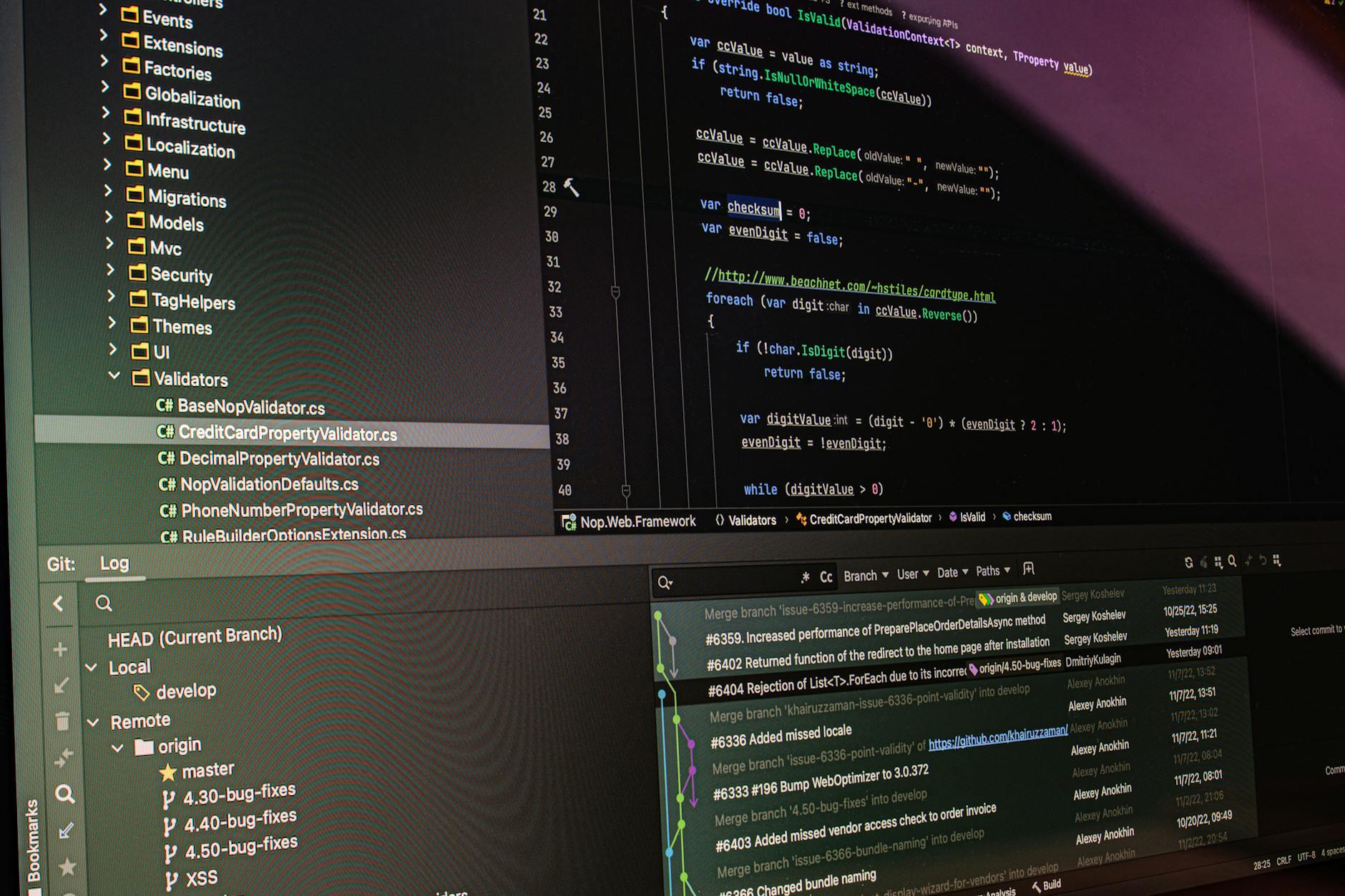
Our RESTful and GraphQL APIs built with Spring Boot and Micronaut deliver sub-50ms response times while handling thousands of requests per second. We implement comprehensive API versioning, rate limiting, caching strategies, and OpenAPI documentation that makes integration straightforward for partners. A retail client's product catalog API serves 8,000 requests/second during peak hours to web, mobile, and marketplace integrations with Redis caching reducing database load by 85%. The API includes field-level permissions, GraphQL federation for aggregating microservices, and automated contract testing that prevents breaking changes.
We architect and implement microservices ecosystems using Spring Cloud, service meshes (Istio), and event-driven patterns that enable independent deployment and scaling. Our approach includes domain-driven design, bounded contexts, and strangler pattern migrations that move monolithic applications to microservices incrementally without big-bang rewrites. For a financial services firm, we decomposed a 400,000-line monolith into 23 microservices over 14 months while maintaining continuous operation. The new architecture reduced deployment time from 6 hours to 12 minutes and enabled teams to release features independently at 3x the previous velocity.
We build streaming data pipelines using Apache Kafka, Apache Flink, and Spring Cloud Stream that process millions of events per hour with exactly-once semantics. Our implementations handle complex event processing, stream joins, windowing aggregations, and real-time analytics that drive operational decisions. The [Real-Time Fleet Management Platform](/case-studies/great-lakes-fleet) we developed ingests GPS telemetry from 850 vehicles every 30 seconds, processes geofencing rules, calculates ETAs using historical patterns, and triggers automated alerts—all with end-to-end latency under 2 seconds. The system has processed over 2.3 billion location events since deployment without data loss.
We implement sophisticated data access layers using JPA/Hibernate, MyBatis, and JOOQ that balance developer productivity with query performance. Our [database services](/services/database-services) include schema design, query optimization, connection pooling strategies, and handling complex scenarios like multi-tenancy and read replicas. For a healthcare analytics platform accessing [SQL Server](/technologies/sql-server) with 400GB of patient data, we optimized Hibernate queries and implemented second-level caching that reduced page load times from 8 seconds to 450ms. The data access layer handles 15,000 complex queries per hour including joins across 20+ tables with predictable performance.
Our Spring Batch implementations handle overnight processing jobs that transform millions of records with retry logic, checkpoint/restart capabilities, and parallel processing. We design ETL pipelines that extract data from multiple sources, apply complex business rules, and load into data warehouses or operational systems. A distribution company's nightly order consolidation job processes 200,000 orders, applies pricing rules, calculates shipping costs, and generates warehouse pick lists in 45 minutes—down from 4+ hours with the previous system. The job includes comprehensive error handling, automatic notifications, and detailed execution metrics for monitoring.
We connect modern Java applications to mainframes, AS/400 systems, and legacy databases using technologies like JMS, MQ, JDBC, and custom protocol implementations. Our [systems integration](/services/systems-integration) approach includes message transformation, protocol bridging, and reliability patterns that ensure no data loss despite system differences. For a manufacturing client, we integrated a new scheduling system with a 1985 mainframe using IBM MQ and custom COBOL copybook parsing, enabling real-time production visibility while preserving the proven legacy system. The integration handles 50,000 messages daily with automatic retry and dead-letter queue management.
We implement comprehensive security using Spring Security, OAuth2/OpenID Connect, JWT tokens, and fine-grained authorization that meets HIPAA, SOC 2, and PCI-DSS requirements. Our security implementations include multi-factor authentication, role-based and attribute-based access control, field-level encryption, and comprehensive audit logging. For a healthcare provider, we built a patient portal with HIPAA-compliant security including encrypted data at rest and in transit, detailed access logs for every PHI view, automated session management, and integration with Active Directory. The system passed three security audits including penetration testing without critical findings.
Skip the recruiting headaches. Our experienced developers integrate with your team and deliver from day one.
FreedomDev is very much the expert in the room for us. They've built us four or five successful projects including things we didn't think were feasible.
Java's ACID transaction support and proven reliability make it ideal for payment processing, accounting systems, and financial applications where data integrity is non-negotiable. We built a payment processing system handling 8,500 transactions daily with dual-write patterns ensuring both the operational database and accounting ledger remain synchronized. The [QuickBooks Bi-Directional Sync](/case-studies/lakeshore-quickbooks) demonstrates Java's capability for financial data integration—processing invoices, payments, and journal entries with reconciliation logic that catches discrepancies before they reach the general ledger. Spring's declarative transaction management with multiple resource coordination (XA transactions) provides the guarantees financial systems require.
HIPAA-compliant healthcare applications benefit from Java's security frameworks, mature libraries for HL7/FHIR integration, and predictable performance under load. We developed a patient engagement platform that integrates with Epic and Cerner EHR systems via HL7 v2 and FHIR APIs, processes 25,000 lab results daily, and enables secure patient-provider messaging. The system implements field-level encryption for PHI, comprehensive audit logs tracking every data access, and role-based permissions with 47 distinct user roles. Java's strong typing caught data mapping errors between different EHR vendors that could have resulted in clinical data misinterpretation.
Real-time visibility into inventory, shipments, and warehouse operations requires the kind of reliable data processing and integration capabilities where Java excels. Our fleet management system tracks 850 vehicles in real-time, optimizes routing using historical traffic patterns, and automatically updates customers with delivery ETAs. The platform integrates with TMS systems, carrier APIs, and IoT sensors on vehicles, processing 2 million telemetry events daily. Java's concurrency utilities enable parallel processing of route optimizations while Spring's scheduling handles periodic tasks like geofence monitoring and maintenance alerts that have prevented 23 breakdowns through predictive maintenance.
High-traffic retail applications demand Java's proven ability to handle thousands of concurrent users during peak shopping periods while maintaining sub-second response times. We built an omnichannel retail platform processing 12,000 orders daily across web, mobile, and in-store channels with real-time inventory synchronization across 40 locations. The system uses Redis caching to serve product catalogs at 3,000 requests/second, Kafka for order event streaming, and Spring State Machine for complex order workflows including split shipments, backorders, and returns. During Black Friday, the platform scaled to 8x normal traffic without performance degradation using horizontal auto-scaling.
Production floor systems require deterministic performance and integration with PLCs, SCADA systems, and legacy equipment—strengths of Java's industrial computing capabilities. We developed an MES that monitors 45 production lines, collects data from 200+ sensors via OPC-UA, and provides real-time visibility into production metrics, quality defects, and equipment utilization. The system uses Java's real-time features (RTSJ) for time-critical data collection with 100ms sampling intervals while Spring Boot handles the business logic for work order management, operator instructions, and quality checks. The platform has tracked 15 million parts through production with complete genealogy for quality traceability.
Complex business rules, lengthy workflows, and regulatory compliance make insurance systems a natural fit for Java's enterprise capabilities and rules engine integration. Our policy administration system handles quoting, underwriting, and policy issuance for 8 insurance products using Drools rules engine for 2,500+ business rules that underwriters can modify without code changes. The claims processing module manages the entire claims lifecycle from FNOL through settlement, integrating with third-party estimating tools, payment systems, and state reporting requirements. Java's strong typing ensures premium calculations and reserve amounts maintain precision through complex rating algorithms.
Multi-tenant educational applications serving thousands of students simultaneously benefit from Java's scalability and rich ecosystem for content delivery and assessment. We built a learning management system supporting 12,000 concurrent students across 50 educational institutions with course management, assignment submission, automated grading, and integration with campus student information systems. The platform uses Spring Security for multi-tenant isolation ensuring students only access their institution's content, JMS for asynchronous processing of assignment uploads, and Jasper Reports for generating transcripts and progress reports. Video content delivery integrates with AWS MediaConvert for transcoding and CloudFront for CDN distribution.
Public sector applications requiring accessibility compliance, security, and long-term supportability leverage Java's stability and extensive documentation. We developed a permit management system for a municipal government processing 8,000 building permits annually with workflow automation, online application submission, fee calculation, and inspector scheduling. The system integrates with property tax databases, GIS mapping systems for zoning verification, and payment gateways for online fee collection. Java's accessibility features and Spring MVC's support for Section 508 compliance ensure all citizens can access services. The application has operated for 6 years with minimal maintenance due to Java's backward compatibility and the availability of long-term support releases.