
FreedomDev builds enterprise C# applications — .NET 8 server apps, legacy .NET Framework migrations, API microservices, and desktop-to-web conversions for companies invested in the Microsoft ecosystem. Based in Zeeland, Michigan with 20+ years of C# and .NET delivery across manufacturing, regulated industries, and mid-market enterprise.
C# holds the #5 position on the TIOBE Index as of early 2026 and was named TIOBE's Programming Language of the Year in 2023 after the largest year-over-year rating increase of any language. Stack Overflow's 2024 Developer Survey placed C# among the top 10 most-used languages globally, with particularly dense adoption in enterprise backend, desktop, and game development. Microsoft ships a new .NET release every November — .NET 8 (LTS, supported through November 2026) and .NET 9 (STS) are both current — and C# 12 and 13 have introduced primary constructors, collection expressions, and params collections that continue tightening the language's expressiveness without sacrificing type safety.
The reason C# dominates enterprise development is not language aesthetics — it is ecosystem depth. SQL Server, Azure, Active Directory, Dynamics 365, SharePoint, Exchange, Power BI, Windows Server — the entire Microsoft platform stack exposes first-party C# SDKs and integrations. When your organization already runs on Microsoft infrastructure, C# is not just a language choice. It is the path of least resistance to every service your business depends on. Entity Framework Core gives you a production-grade ORM with migration tooling. ASP.NET Core delivers request throughput that competes with Go and Rust in TechEmpower benchmarks. Visual Studio and Rider provide debugging, profiling, and refactoring capabilities that few other language ecosystems match.
The enterprise C# landscape in 2026 has a specific tension: modern .NET (cross-platform, high-performance, cloud-native) versus legacy .NET Framework (Windows-only, IIS-bound, often running on Server 2012 or 2016). Microsoft ended active development on .NET Framework at version 4.8.1 — it receives security patches but no new features, no performance improvements, and no new APIs. Every month you stay on .NET Framework, the gap between your application and the current platform widens. Your developers cannot use C# 12 features. Your application cannot run in a Linux container. Your deployment pipeline is tied to IIS and Windows Server licensing costs.
FreedomDev has built and modernized C# applications for over two decades. We started with .NET Framework 1.1 and have shipped production systems on every major release through .NET 8. Our client base — manufacturers, financial services, healthcare, insurance — runs the kind of C# applications that this page addresses: WinForms and WPF line-of-business tools that 200 people use daily, ASP.NET Web Forms portals that process millions in transactions, Windows Services that orchestrate overnight batch processing. These applications work. They also represent significant technical debt, and the cost of maintaining them on a dead framework compounds every year.
Migrating from .NET Framework 4.x to .NET 8 is the highest-impact modernization available to C# shops. The payoff is substantial: 2-5x request throughput improvement in ASP.NET Core versus ASP.NET Framework (verified in TechEmpower benchmarks), cross-platform deployment to Linux containers cutting Windows Server licensing costs, access to C# 12 language features and the full modern NuGet ecosystem, and native support for cloud-native patterns — health checks, OpenTelemetry, configuration providers, dependency injection without third-party containers. FreedomDev uses the incremental migration approach Microsoft recommends: we run the .NET Upgrade Assistant for initial analysis, then migrate project by project using YARP (Yet Another Reverse Proxy) to route traffic between Framework and modern .NET endpoints during the transition. No big-bang rewrite. No feature freeze. Your application stays live throughout the migration. We handle the hard parts — System.Web dependencies, ASMX/WCF service replacements, Windows-specific APIs that need cross-platform alternatives, and EF6-to-EF Core data layer conversion.
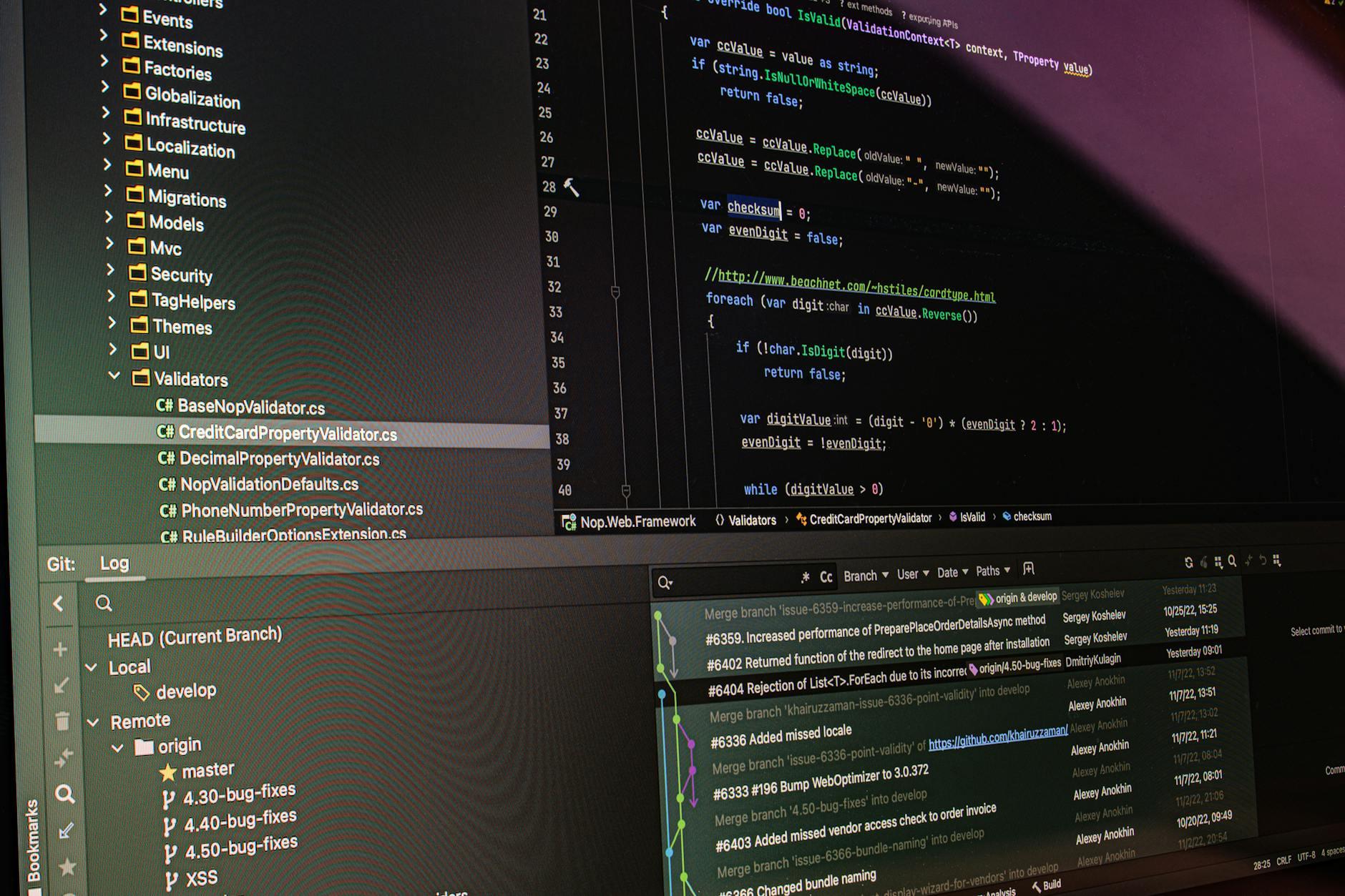
ASP.NET Core is the highest-performing mainstream web framework in the Microsoft ecosystem, consistently ranking in the top tier of TechEmpower's composite benchmarks. FreedomDev builds production API systems using both controller-based architectures for complex domain APIs and Minimal APIs (introduced in .NET 6, mature in .NET 8) for lightweight, high-throughput microservices. We implement vertical slice architecture for teams that want feature-based organization, or clean architecture with MediatR for larger codebases that benefit from explicit command/query separation. Every API ships with OpenAPI documentation via Swashbuckle or NSwag, structured logging through Serilog, health check endpoints, and rate limiting using the built-in middleware introduced in .NET 7. For microservices decomposition, we use .NET Aspire for local development orchestration, RabbitMQ or Azure Service Bus for async messaging, and Polly for retry/circuit-breaker resilience patterns.
Your organization runs a WinForms or WPF line-of-business application that 50, 200, or 500 employees use every day. It was built on .NET Framework 3.5 or 4.0. It works, but it is tied to specific Windows versions, it cannot be accessed remotely without Citrix or RDP, deployment means manually copying MSI files, and the original developer left three years ago. FreedomDev modernizes these applications through one of three paths depending on your constraints: (1) port the desktop app to .NET 8 (WinForms and WPF are supported on modern .NET) to get current language features and improved performance while preserving the existing UI investment; (2) rebuild as a Blazor Server or Blazor WebAssembly application, converting the desktop UI to web-accessible components that your workforce can use from any browser; (3) extract the business logic into an API layer and build a new React or Blazor frontend, preserving the domain logic while modernizing the user experience entirely.
Entity Framework Core is the default ORM for .NET applications, and using it well requires deliberate architecture decisions. FreedomDev designs data layers that match the application's actual query patterns — EF Core with code-first migrations and compiled queries for domain-heavy applications where developer productivity matters most, Dapper for read-heavy reporting scenarios where raw SQL performance is critical, or a hybrid approach where EF Core handles writes and Dapper handles complex reporting queries. We implement the repository pattern only when it adds genuine value (not as cargo-cult architecture), configure connection resiliency for cloud-hosted SQL Server and Azure SQL, and set up migration pipelines that apply schema changes as part of CI/CD deployment — not as manual scripts run against production at midnight. For teams migrating from EF6, we handle the differences: no lazy loading by default, different change tracking behavior, and the query translation changes that can silently alter performance characteristics.
C# is the first-class language across Azure — Azure Functions, App Service, Azure Kubernetes Service, Azure Container Apps, and every Azure SDK ships C# support first. FreedomDev builds cloud-native C# applications using Azure Container Apps for microservices that need autoscaling without Kubernetes complexity, Azure Functions for event-driven workloads (blob processing, queue triggers, timer-based batch jobs), and Azure App Service for teams that want PaaS simplicity. We implement managed identity for credential-free authentication to Azure SQL, Key Vault, Storage, and Service Bus. We use .NET Aspire to define the full distributed application topology — databases, caches, message brokers, services — in C# code that runs identically in local development and production deployment.
Enterprise C# applications without automated testing are enterprise liabilities. FreedomDev establishes testing infrastructure using xUnit (the dominant test framework in .NET), NSubstitute for mocking, Testcontainers for integration tests that spin up real SQL Server and Redis instances in Docker, and Playwright for end-to-end browser testing of Blazor and React frontends. We configure CI/CD pipelines in GitHub Actions or Azure DevOps that run tests, check code coverage thresholds, perform static analysis via Roslyn analyzers and SonarQube, build Docker images, and deploy to staging environments on every pull request. Production deployments use blue-green or rolling update strategies with automated rollback on health check failure.
Skip the recruiting headaches. Our experienced developers integrate with your team and deliver from day one.
We had a WinForms application from 2010 that 200 employees used daily and one developer who understood it. FreedomDev migrated the business logic to .NET 8, rebuilt the frontend in Blazor, and delivered screen by screen over five months. Our team can access it from any browser now, maintenance costs dropped 40%, and we actually have test coverage for the first time.
A West Michigan manufacturer running Dynamics 365 Finance & Operations alongside a 12-year-old custom .NET Framework application that manages shop floor scheduling, quality inspection workflows, and vendor scorecards. The custom app was built on ASP.NET Web Forms with a SQL Server backend. It cannot exchange data with D365 in real time — overnight batch jobs via flat-file exports create a 24-hour data lag that causes production scheduling conflicts and inaccurate inventory counts. FreedomDev builds a C# middleware layer on ASP.NET Core that exposes a clean REST API surface, subscribes to D365 OData change notifications for real-time data sync, and replaces the flat-file batch jobs entirely. The existing Web Forms frontend migrates to Blazor Server incrementally using YARP routing, so users transition screen by screen over 4 months without a hard cutover. The scheduling engine and quality workflows get extracted into domain services with proper unit test coverage. Result: real-time ERP integration, a maintainable codebase on .NET 8, and elimination of the overnight batch window that was the single biggest operational complaint. Investment range: $200K-$450K depending on module complexity.
An insurance company operating a WinForms claims processing application built in 2009 on .NET Framework 3.5. The application handles policy lookup, claims intake, adjuster assignment, document management, and payment authorization. Three hundred adjusters use it daily, deployed via ClickOnce. The business problem: adjusters in the field cannot access the application from tablets or phones, new hire onboarding requires IT to configure a Windows laptop with the correct .NET Framework version, and the original development team is gone. FreedomDev executes a phased migration: first, we extract the business logic from the WinForms code-behind into a shared class library targeting .NET Standard 2.0 (compatible with both Framework and modern .NET). Second, we build a Blazor Server frontend that replicates each WinForms screen as a Blazor component, releasing screens to production in batches of 3-5 over 6 months. Third, we retire the WinForms client once all screens are live in the browser. The Blazor app runs on any device with a browser — tablets, phones, Chromebooks — eliminating the ClickOnce deployment headache entirely. Claims processing logic is preserved exactly because it was extracted, not rewritten.
A healthcare technology company with a monolithic ASP.NET Framework application that manages HIPAA compliance documentation, audit trail recording, risk assessments, and employee training tracking for hospital systems. The monolith deploys as a single IIS application — a bug in the training module takes down the entire compliance platform. Deployment requires a maintenance window because IIS app pool recycling drops active sessions. FreedomDev decomposes the monolith into four ASP.NET Core microservices: compliance documentation, audit trail, risk assessment, and training management. Each service owns its own database (SQL Server with EF Core), communicates via RabbitMQ for async events (e.g., a completed risk assessment triggers a training assignment), and deploys independently to Azure Container Apps with zero-downtime rolling updates. The API gateway uses YARP for request routing and handles cross-cutting concerns — authentication via Azure AD B2C, request logging, rate limiting. HIPAA audit requirements are satisfied through immutable event sourcing in the audit trail service. Result: independent deployment per service, isolated failure domains, and a compliance platform that hospital IT departments trust with PHI.
A financial services firm running 14 Windows Services written in C# on .NET Framework 4.5 that perform overnight batch processing: transaction reconciliation, regulatory report generation, fee calculation, and statement preparation. These services run on a dedicated Windows Server 2016 machine. When a service fails at 2 AM, the on-call engineer remotes into the server, checks Windows Event Viewer, restarts the service, and hopes the batch completes before business hours. There is no retry logic, no structured logging, and no monitoring beyond 'did it finish before 6 AM.' FreedomDev migrates each Windows Service to a .NET 8 Worker Service hosted in Docker containers on Azure Container Apps. Batch orchestration moves to Hangfire with a dashboard for job monitoring, retry configuration, and failure alerting through PagerDuty. Structured logging via Serilog ships to Azure Application Insights, giving the operations team searchable, queryable logs instead of Event Viewer text dumps. Each batch job gets proper error handling with dead-letter queues for transactions that fail validation. The 2 AM phone calls stop. The batch window shrinks from 6 hours to 90 minutes because .NET 8 processes the same workloads significantly faster than .NET Framework 4.5. Investment: $150K-$300K over 4-6 months.