
Partner with FreedomDev, a leading mobile development company in Ohio, to create innovative mobile solutions that drive business success in the Heartland.
FreedomDev is based in West Michigan and works with clients remotely across the United States.
Ohio ranks as the third-largest manufacturing state in the U.S., with over 13,600 manufacturing establishments generating $116 billion in annual output. This industrial concentration creates unique mobile development challenges: warehouse management apps that handle RFID scanning across 500,000-square-foot facilities, field service applications supporting technicians across Cleveland-to-Cincinnati territories, and quality control systems that integrate with legacy programmable logic controllers. We've spent 20+ years building mobile solutions for Midwest manufacturers, distributors, and logistics companies that deal with these exact requirements.
The Ohio market presents specific technical constraints that generic app development shops consistently underestimate. Companies operating facilities in Akron, Toledo, and Dayton frequently encounter spotty cellular coverage in industrial parks and warehouse dead zones. Mobile solutions must handle offline data synchronization for inventory counts, service tickets, and inspection records that can't wait for connectivity. We implement local SQLite databases with conflict-resolution logic that automatically syncs when devices reconnect, preventing the data loss that derails production schedules and creates compliance headaches.
Our [mobile development expertise](/services/mobile-development) extends beyond consumer-facing applications into the industrial realm where Ohio businesses actually compete. A Youngstown steel fabricator doesn't need another generic e-commerce app—they need mobile interfaces for CNC machine monitoring that parse Fanuc controller data in real-time. A Columbus distributor requires handheld applications that perform bin location lookups against 40,000-SKU inventories while forklift operators navigate warehouse aisles. These scenarios demand developers who understand both mobile frameworks and the business systems they must integrate with.
Geographic dispersion across Ohio creates mobile deployment challenges that require careful architecture planning. Field service organizations covering territories from Sandusky to Portsmouth need applications that function identically whether technicians connect via Cleveland's 5G networks or rural areas with 3G coverage. We design adaptive mobile solutions that adjust data payload sizes, implement progressive image loading, and cache critical reference data locally. This ensures consistent performance regardless of network conditions—a requirement that separates functional field applications from abandoned projects.
The intersection of mobile technology and Ohio's industrial base generates specific integration requirements. Manufacturing execution systems from Rockwell Automation, SYSPRO, and Epicor need mobile interfaces that factory floor workers can operate while wearing gloves. Distribution centers running Manhattan Associates or Blue Yonder WMS platforms require mobile picking applications that handle multi-location inventory allocation logic. Our team has implemented these integrations repeatedly, understanding the API limitations, data synchronization timing requirements, and error handling patterns that ensure reliable operation.
Security considerations for Ohio mobile applications extend beyond standard consumer app requirements. Healthcare organizations in Cleveland and Cincinnati need HIPAA-compliant mobile solutions with encrypted local storage, certificate pinning, and remote wipe capabilities. Financial services companies require mobile banking interfaces that implement multi-factor authentication, biometric verification, and transaction signing that meets PSD2 standards. We architect mobile security from the ground up, implementing defense-in-depth strategies that satisfy both compliance auditors and penetration testers.
Mobile development timelines and costs vary dramatically based on backend complexity, not interface design. A mobile app displaying product catalogs might require 8-10 weeks of development, while a field service application that synchronizes with ServiceMax, updates Salesforce records, and triggers parts ordering through NetSuite could require 16-20 weeks. Ohio companies often underestimate this backend integration work because they focus on the visible mobile interface rather than the data orchestration layer that makes it functional. Our discovery process identifies these dependencies early, providing realistic timelines based on actual technical requirements rather than optimistic guesses.
Cross-platform versus native development represents a critical architectural decision for Ohio businesses. React Native and Flutter frameworks enable code sharing between iOS and Android, potentially reducing development costs by 30-40% compared to separate native implementations. However, applications requiring advanced camera functionality, complex gesture handling, or tight integration with device sensors often perform better with native Swift or Kotlin development. We evaluate this tradeoff based on specific feature requirements rather than defaulting to one approach, as detailed in [our case studies](/case-studies) where different projects warranted different technology choices.
The maintenance phase of mobile development receives insufficient attention during initial planning but determines long-term success. Apple's annual iOS updates and Android's fragmented device ecosystem create ongoing compatibility requirements. Security vulnerabilities in third-party libraries demand quarterly dependency updates. Backend API changes require corresponding mobile updates to maintain functionality. Ohio companies need development partners who provide structured maintenance programs—not just initial app delivery followed by radio silence when compatibility issues emerge six months later.
Mobile analytics and performance monitoring separate functional applications from optimized solutions. We implement instrumentation that tracks screen load times, API response latencies, crash rates, and user flow patterns across different device types and network conditions. This data reveals that 78% of users abandon apps after encountering three errors, and 53% uninstall applications that exhibit slow performance. For Ohio businesses deploying mobile solutions to field workers or customers, these metrics directly impact adoption rates and operational efficiency.
The regulatory environment surrounding mobile applications continues to evolve, creating compliance requirements for Ohio businesses. California's CCPA affects any company with California customers, regardless of Ohio headquarters location. GDPR applies to organizations processing European citizen data. Industry-specific regulations like FDA 21 CFR Part 11 for pharmaceutical manufacturers or PCI DSS for payment processing create additional mobile security and audit requirements. Our development process incorporates compliance considerations from initial architecture through deployment, preventing expensive retrofitting when auditors identify gaps.
Mobile development success metrics should align with business objectives rather than vanity metrics like download counts. A distributor's mobile ordering app succeeds when it increases average order values by 18% and reduces phone orders by 65%, not when it achieves 10,000 downloads with minimal usage. A manufacturer's quality control application delivers value when it decreases defect reporting time from 45 minutes to 8 minutes, not when executives praise its interface design. We establish measurable success criteria during discovery that connect mobile functionality to financial and operational outcomes.
Ohio manufacturing facilities and warehouses frequently have cellular dead zones where traditional cloud-dependent applications fail. We implement offline-first mobile architectures using local SQLite databases, background synchronization queues, and conflict resolution algorithms that handle simultaneous updates across multiple devices. This approach enabled a Dayton automotive supplier to continue production tracking when their facility's Wi-Fi infrastructure failed, queuing 3,400 transactions locally that automatically synchronized when connectivity restored. The system handles network transitions seamlessly, switching between Wi-Fi, cellular, and offline modes without user intervention or data loss.

Modern mobile applications must interact with decades-old enterprise systems that Ohio manufacturers rely upon daily. We've integrated mobile solutions with SAP, Oracle EBS, Microsoft Dynamics, and custom AS/400 applications through REST APIs, SOAP web services, and direct database connections when necessary. Our [Real-Time Fleet Management Platform](/case-studies/great-lakes-fleet) demonstrates this capability, connecting mobile devices with dispatch systems, GPS tracking platforms, and customer notification systems through a unified API layer. This integration approach maintains data consistency across systems while providing mobile users with real-time access to critical business information.
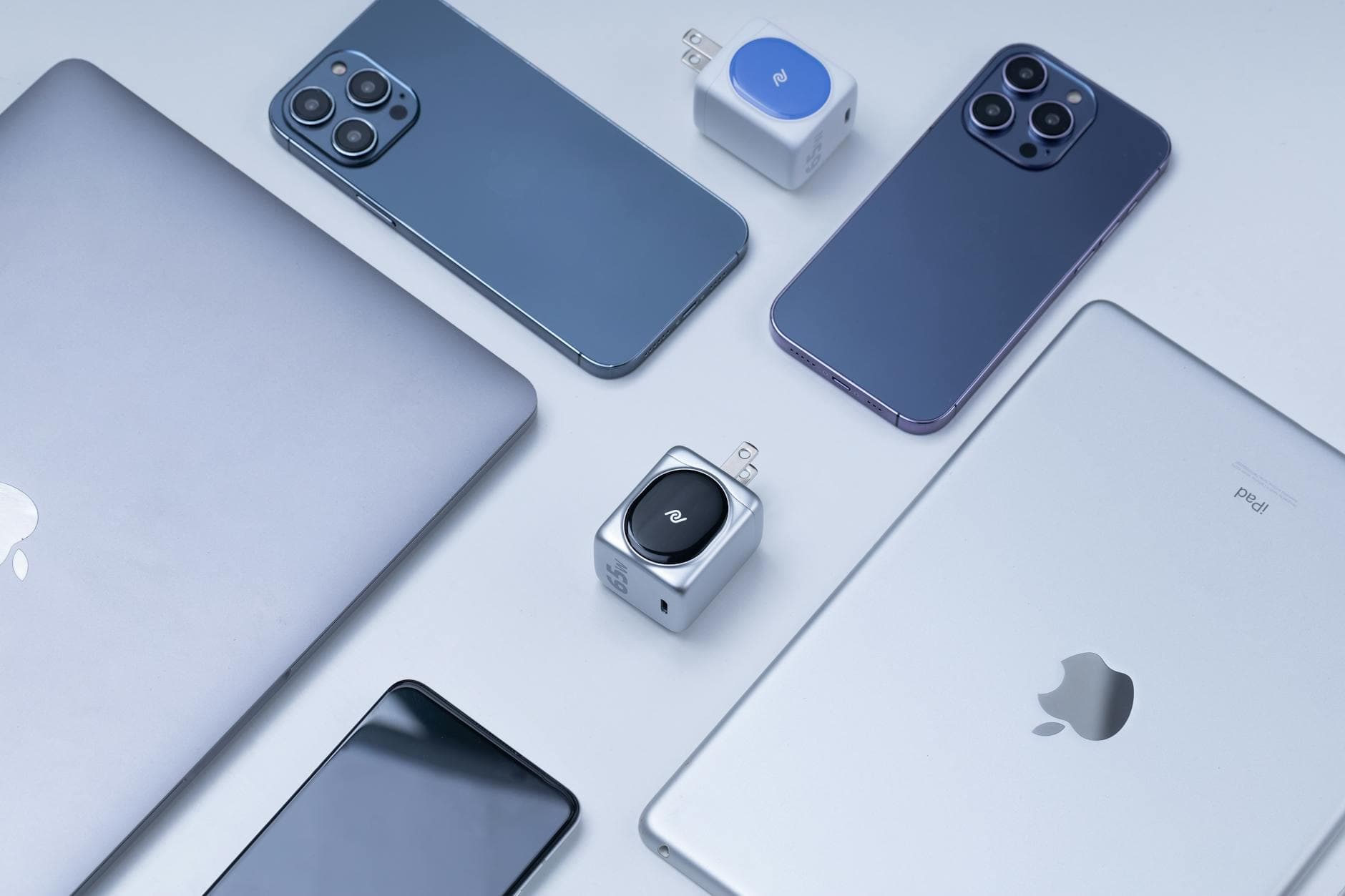
Budget constraints often require Ohio businesses to support both iOS and Android platforms without funding duplicate development efforts. We leverage React Native and Flutter frameworks to share 70-85% of code between platforms while implementing platform-specific modules for features requiring native performance. This hybrid approach delivered a Columbus distributor's mobile ordering application that runs identically on iPads used by outside sales representatives and Android devices used by customer service teams, requiring 12 weeks of development instead of the 20+ weeks separate native applications would demand. Performance profiling ensures cross-platform apps match native benchmarks for critical operations.

Warehouse, inventory, and field service mobile applications require robust scanning capabilities that extend beyond basic barcode reading. We implement camera-based scanning using ML Kit and ZXing libraries, Bluetooth integration with Zebra and Honeywell handheld scanners, and RFID tag reading through specialized hardware interfaces. Validation logic prevents common scanning errors: verifying item quantities against expected ranges, confirming location codes match warehouse mapping databases, and detecting duplicate scans within configurable time windows. A Toledo distribution center using our mobile receiving application reduced receiving errors by 73% through validation rules that catch mismatches between purchase orders and scanned items before inventory updates commit.
Mobile devices accessing sensitive business data require security measures beyond username/password combinations. We implement biometric authentication using Face ID, Touch ID, and Android BiometricPrompt APIs, certificate pinning to prevent man-in-the-middle attacks, and encrypted local storage using AES-256 encryption. Remote management capabilities enable IT administrators to enforce security policies, remotely wipe lost devices, and revoke access certificates when employees separate. A Cincinnati financial services firm uses these security layers in their mobile banking application, achieving PCI DSS compliance for mobile payment processing while maintaining user experience that doesn't frustrate customers with excessive security friction.
Effective mobile applications leverage push notifications for time-sensitive communications without overwhelming users with irrelevant messages. We implement Firebase Cloud Messaging and Apple Push Notification Service with targeting logic based on user roles, geographic locations, and behavioral patterns. Notification delivery timing considers time zones, business hours, and historical engagement patterns to maximize open rates. A statewide field service organization uses contextual notifications to alert technicians about urgent service requests within their territories, achieving 89% notification open rates compared to industry averages of 3-5% by delivering relevant, actionable messages rather than generic broadcasts.
Generic mobile interface components often fail to support Ohio manufacturers' unique business processes efficiently. We develop custom UI components for scenarios like multi-level bill of materials navigation, visual bin location pickers that overlay warehouse floor plans, and signature capture workflows that meet legal requirements for proof of delivery. These specialized components reduce training time and operational errors compared to forcing business processes into standard interface patterns. A Cleveland manufacturer's quality control application uses custom inspection checklists with conditional question logic that adapts based on product types and previous responses, reducing inspection time by 40% while capturing more detailed defect data.
Mobile application quality depends on rigorous automated testing that catches regressions before they reach production environments. We implement unit tests for business logic, integration tests for API interactions, and UI automation tests using XCTest and Espresso frameworks. Continuous integration pipelines automatically build applications, execute test suites, and deploy to TestFlight or Google Play internal testing tracks when code commits pass validation. This automation enabled a Columbus logistics company to deploy mobile application updates weekly instead of quarterly, reducing time-to-market for new features while maintaining 99.7% crash-free session rates across 1,200 field devices.
FreedomDev brought all our separate systems into one closed-loop system. We're getting more done with less time and the same amount of people.
Mobile applications eliminate paper-based workflows, manual data entry, and redundant system updates that consume staff time and introduce errors.
Technicians, delivery drivers, and sales representatives make better decisions when they access current inventory levels, customer history, and product specifications from mobile devices.
Field service and delivery personnel who process payments and generate invoices on-site reduce billing cycles from weeks to days, improving accounts receivable aging.
Mobile applications that provide real-time delivery tracking, appointment confirmations, and digital signature proof of service increase customer satisfaction scores and reduce support inquiries.
Mobile data entry at point of activity eliminates transcription errors from paper forms and reduces the time lag between event occurrence and system recording.
Efficient mobile tools enable existing staff to handle higher transaction volumes, larger service territories, and more complex workflows without adding personnel.
We conduct on-site workshops with stakeholders to understand business processes, identify pain points, and document technical requirements. This includes reviewing existing systems, mapping user workflows, and identifying integration requirements with ERP, CRM, and other enterprise platforms. Deliverables include detailed functional specifications, technical architecture proposals, and project timelines with specific milestones.
Our team designs system architecture including mobile platform selection (native vs. cross-platform), backend API design, database schemas, and integration approaches for enterprise systems. We create detailed technical specifications, data flow diagrams, and security architecture documents. This phase includes API design for backend services, offline data synchronization strategies, and third-party service evaluation (analytics, crash reporting, push notifications).
Development proceeds in two-week sprints with working software demonstrations at each sprint conclusion. This iterative approach enables course corrections based on user feedback before investing significant development effort in wrong directions. We prioritize core functionality first, then add advanced features in subsequent sprints, ensuring early validation of critical workflows and integration points.
Comprehensive testing includes unit tests for business logic, integration tests for API interactions, and UI automation tests across multiple device types and OS versions. Security testing validates authentication mechanisms, encryption implementation, and API security. Performance testing under various network conditions ensures applications function acceptably on 3G networks and in offline scenarios common in Ohio industrial environments.
We manage App Store and Google Play submission processes, enterprise distribution setup for internal applications, and mobile device management (MDM) configuration. User training includes role-specific instruction for field workers, administrators, and support staff. We provide deployment documentation covering installation procedures, configuration settings, troubleshooting guides, and escalation procedures.
Post-deployment support includes quarterly maintenance releases addressing OS updates and security patches, performance monitoring and optimization, and feature enhancements based on user feedback and changing business requirements. We provide service level agreements defining response times for critical issues, regular health check reviews analyzing usage patterns and performance metrics, and proactive recommendations for optimization opportunities identified through monitoring data.
Ohio's economic composition creates distinct mobile application requirements that differ significantly from coastal tech markets. The state's manufacturing sector employs over 695,000 workers across automotive, plastics, metals fabrication, and food processing industries. These companies need mobile solutions for production tracking, quality control, inventory management, and maintenance scheduling rather than consumer social applications or entertainment platforms. Development teams must understand manufacturing terminology, production workflows, and integration requirements for industrial equipment—knowledge that general mobile development agencies typically lack.
Geographic factors influence mobile application architecture decisions for Ohio businesses. A company with facilities in Cleveland, Columbus, and Cincinnati must account for network infrastructure variations between major metropolitan areas and rural locations where many manufacturing plants operate. Interstate 70, 71, and 75 corridors contain numerous distribution centers and logistics operations requiring mobile solutions that function reliably during transit through areas with inconsistent cellular coverage. We design mobile architectures that accommodate these geographic realities rather than assuming consistent high-bandwidth connectivity that exists in urban tech hubs but not across Ohio's industrial landscape.
The state's logistics and distribution sector generates substantial mobile development opportunities. Ohio's position at the intersection of major freight corridors and its proximity to 60% of U.S. and Canadian manufacturing creates a concentration of warehousing, transportation, and third-party logistics operations. These companies require mobile applications for route optimization, proof of delivery, warehouse management, and shipment tracking that integrate with transportation management systems and warehouse control systems. Our [systems integration](/services/systems-integration) experience enables mobile applications that communicate effectively with Manhattan Associates, HighJump, and Blue Yonder platforms common in Ohio distribution centers.
Healthcare represents another significant vertical market for mobile development in Ohio. The Cleveland Clinic, Ohio State University Wexner Medical Center, and Cincinnati Children's Hospital rank among the nation's leading healthcare institutions, while the state contains 241 hospitals serving 11.8 million residents. Mobile applications supporting patient engagement, clinical workflows, and remote monitoring must comply with HIPAA regulations while integrating with Epic, Cerner, and Meditech electronic health record systems. We've developed HIPAA-compliant mobile solutions that handle protected health information securely while providing clinicians and patients with necessary functionality.
Ohio's agricultural sector creates mobile development opportunities often overlooked by urban development firms. The state ranks among the top 10 nationally for corn, soybeans, dairy production, and greenhouse/nursery products, with 77,800 farms generating $11.3 billion in annual receipts. Modern agricultural operations use mobile applications for precision farming, livestock management, crop scouting, and commodity marketing. These applications must function in rural areas with limited connectivity, integrate with John Deere Operations Center and other farm management platforms, and handle GPS-based field mapping. Our mobile solutions support offline operation essential for agricultural applications where cellular coverage remains unreliable.
The state's higher education sector influences mobile development talent availability and innovation. Ohio State University, Case Western Reserve University, University of Cincinnati, and University of Akron produce computer science and software engineering graduates who understand both mobile development technologies and the state's industrial economy. This talent pool enables Ohio companies to build internal mobile development capabilities while partnering with experienced firms like FreedomDev for specialized expertise and capacity augmentation. The combination of local talent and specialized consulting creates effective mobile development teams.
Regulatory considerations vary by industry but consistently affect mobile application architecture decisions for Ohio businesses. Manufacturing companies exporting products must comply with International Traffic in Arms Regulations (ITAR) or Export Administration Regulations (EAR), which restrict data storage locations and access by foreign nationals. Financial services firms must satisfy Federal Financial Institutions Examination Council (FFIEC) guidance for mobile financial services. Healthcare organizations must implement HIPAA security and privacy safeguards. Our [custom software development](/services/custom-software-development) process incorporates compliance requirements from initial architecture rather than treating them as afterthoughts that require expensive retrofitting.
The economic development incentives available through JobsOhio and regional economic development organizations sometimes include technology adoption programs that offset mobile development costs. Manufacturing extension partnerships provide consulting and funding assistance for technology implementations that improve productivity. Companies pursuing these incentives need development partners who document project deliverables, provide detailed implementation plans, and track measurable outcomes that satisfy grant reporting requirements. We've supported multiple Ohio companies through incentive application processes by providing technical documentation and success metrics that demonstrate project value and milestone achievement.
FreedomDev is based in West Michigan and works with clients remotely across the United States.
Schedule a direct consultation with one of our senior architects.
Twenty years serving Midwest manufacturers, distributors, and logistics companies means we understand the specific technical requirements, integration challenges, and operational constraints these industries face. We've implemented mobile solutions for warehouse management, field service, route optimization, and production tracking—not just consumer applications.
Our portfolio includes successful integrations with SAP, Oracle, Microsoft Dynamics, Salesforce, Manhattan Associates, and numerous custom legacy systems common in Ohio businesses. We understand API limitations, data synchronization patterns, and error handling strategies that ensure reliable operation. Check [our case studies](/case-studies) for specific integration examples and measurable outcomes.
We've developed HIPAA-compliant healthcare applications, PCI DSS-certified payment processing systems, and ITAR-compliant manufacturing solutions. Our security architecture incorporates defense-in-depth strategies including encrypted storage, certificate pinning, biometric authentication, and remote management capabilities that satisfy both compliance auditors and penetration testers.
We provide detailed project estimates based on specific technical requirements rather than optimistic guesses. Discovery workshops identify integration complexity, offline functionality needs, and third-party dependencies that affect timelines and costs. Regular sprint demonstrations ensure alignment throughout development, and we escalate potential issues immediately rather than surprising clients near project completion.
Mobile applications require ongoing maintenance for OS updates, security patches, and feature enhancements. We provide structured support programs with defined service levels rather than disappearing after initial delivery. Our maintenance includes quarterly updates, performance monitoring, proactive optimization recommendations, and rapid response when production issues occur. Multiple clients have partnered with us for 10+ years because we deliver reliable support, not just initial development. [Contact us](/contact) to discuss how we can support your mobile development requirements across their complete lifecycle.
Explore all our software services in Ohio
Let’s build a sensible software solution for your Ohio business.