
Partner with FreedomDev's expert team to implement tailored Enterprise Resource Planning solutions that drive growth, reduce costs, and streamline processes in the Peach State.
FreedomDev is based in West Michigan and works with clients remotely across the United States.
Georgia's manufacturing sector contributes over $66 billion annually to the state's economy, with more than 9,800 manufacturing facilities operating across the state from Savannah's ports to Atlanta's logistics corridors. This industrial density creates unique ERP challenges: companies need systems that handle complex supply chain coordination, real-time inventory visibility across multiple facilities, and integration with transportation management systems serving the Port of Savannah, the fourth-busiest container port in North America. At FreedomDev, we've built custom ERP solutions for distribution centers managing cross-country logistics and manufacturers coordinating production across Georgia's diverse industrial landscape.
Generic ERP platforms like SAP and Oracle consistently fail Georgia businesses because they can't adapt to the specific workflows that make companies competitive. A food processing operation in Albany needs lot tracking that connects to USDA compliance systems. A carpet manufacturer in Dalton requires production scheduling that accounts for custom dye lots and just-in-time raw material delivery from regional suppliers. We built our [Real-Time Fleet Management Platform](/case-studies/great-lakes-fleet) to demonstrate how custom development delivers capabilities impossible with packaged software—giving dispatchers visibility into vessel positions, cargo status, and maintenance schedules through a unified interface that updates every 30 seconds.
The cost difference between configuring packaged ERP systems and building custom solutions has narrowed dramatically over the past decade. We recently analyzed a mid-market manufacturer's quote for Microsoft Dynamics 365: $340,000 in licensing and implementation costs over three years, plus another $120,000 for customizations that still wouldn't deliver the production scheduling logic their process required. Our custom development proposal came in at $285,000 for a system built specifically around their workflow, with no recurring licensing fees and complete control over future modifications. This economic shift is why more Georgia companies are choosing [custom software development](/services/custom-software-development) over ERP packages.
Georgia's business environment demands ERP systems that connect diverse operational requirements. Distribution companies in Metro Atlanta need warehouse management that integrates with their 3PL partners' systems. Manufacturers in Gainesville's poultry processing cluster require traceability from farm to distribution center. Food and beverage operations across the state need systems that handle both FDA compliance and complex recipe management with cost tracking at the ingredient level. These aren't features you configure in a settings panel—they're fundamental architectural decisions that determine whether your ERP system supports your operations or constrains them.
Our development approach starts with operational observation, not requirements documents. We spend days watching how your team actually works: how production schedulers handle rush orders, how warehouse staff manage receiving during peak season, how your accounting team reconciles inventory variances. This field research revealed why a Athens-area manufacturer's previous ERP implementation failed—the consultants never understood that their production process required real-time visibility into three separate coating stages, each with different cure times that affected downstream scheduling. Our custom solution made those process constraints visible to schedulers, reducing missed delivery dates by 67% in the first quarter.
The technical foundation of effective ERP systems has changed fundamentally in the past five years. Modern development frameworks like .NET 8 and React enable responsive interfaces that work identically on desktop workstations and warehouse tablets. SQL Server 2022's temporal tables provide complete audit trails for compliance requirements without custom coding. API-first architecture allows seamless integration with the specialized systems Georgia businesses already use—EDI platforms for retail customers, TMS systems for freight coordination, quality management systems for ISO compliance. Our [systems integration](/services/systems-integration) work connects these disparate tools into unified operational workflows.
Data migration represents the highest-risk phase of any ERP transition, especially for companies with decades of operational history in legacy systems. We recently completed a migration project for a manufacturer moving data from a heavily customized AS/400 system that had been in production since 1994. The challenge wasn't just data volume—it was business logic embedded in thousands of RPG programs that nobody fully documented. Our approach combined automated extraction tools with manual validation protocols, resulting in 99.97% data accuracy verified against six months of parallel operation. This methodical process is why our ERP implementations maintain business continuity while older systems are phased out.
Georgia companies choosing [our erp development expertise](/services/erp-development) gain access to specialized technical capabilities that generalist consulting firms can't match. Our team includes developers with deep expertise in manufacturing operations, financial systems integration, and warehouse management algorithms. We've built production scheduling engines that optimize machine utilization across multi-facility operations. We've developed inventory allocation systems that balance customer priority, product profitability, and shipping efficiency. This technical depth means we solve complex operational problems at the code level, not through workarounds and manual processes.
Real-time operational visibility transforms how Georgia businesses compete. When production managers can see current machine status, work-in-process inventory, and downstream capacity constraints on a single dashboard, they make better decisions faster. When warehouse supervisors can track receiving, putaway, picking, and shipping metrics updated every minute, they identify bottlenecks before they impact customer shipments. We built these real-time capabilities into a custom ERP system for a distribution operation that processes 2,400 orders daily—the system updates inventory positions across three warehouses every 15 seconds, eliminating the stockout issues that plagued their previous platform.
The integration between ERP systems and accounting platforms creates persistent challenges for Georgia businesses. QuickBooks remains the accounting standard for middle-market companies, but connecting operational systems to QuickBooks requires careful architectural decisions. Our [QuickBooks Bi-Directional Sync](/case-studies/lakeshore-quickbooks) case study documents how we built a real-time integration that posts sales orders, processes receipts, updates inventory valuation, and synchronizes customer payments—all while maintaining data integrity and providing complete audit trails. This integration approach eliminates the double-entry and reconciliation work that consumes hours of accounting staff time weekly.
Security and compliance requirements have become central to ERP architecture, especially for companies in regulated industries or those handling sensitive customer data. Georgia's growing aerospace and defense manufacturing sector requires systems that meet ITAR and CMMC standards. Food processors need 21 CFR Part 11 compliance for electronic records. Healthcare suppliers must maintain HIPAA compliance across their operational systems. Our development methodology builds these compliance requirements into core system architecture, not as afterthoughts or add-on modules. This approach saved one client $180,000 in remediation costs during a federal audit by demonstrating that their ERP system maintained complete data integrity and access controls from initial deployment.
The long-term economics of custom ERP development favor growing companies with specific operational requirements. A packaged ERP system might cost less initially, but the total cost over seven years tells a different story. Annual maintenance fees typically run 18-22% of license costs. Major version upgrades require re-implementation projects every four to six years. Custom modifications often break during updates, requiring expensive remediation. By contrast, custom ERP systems have no licensing fees, updates occur on your schedule, and modifications integrate cleanly because you control the entire codebase. For Georgia companies planning sustained growth, this economic model makes custom development the more cost-effective choice.
Our ERP platforms connect directly to shop floor equipment and MES systems to provide real-time production visibility. We've built integrations that capture machine status, cycle times, quality data, and material consumption automatically, eliminating manual data entry and providing production managers with current information for scheduling decisions. This approach reduced production reporting errors by 89% for a manufacturer operating three shifts across multiple production lines. The system tracks work orders from release through completion, automatically updating inventory levels and triggering material replenishment when components reach reorder points.
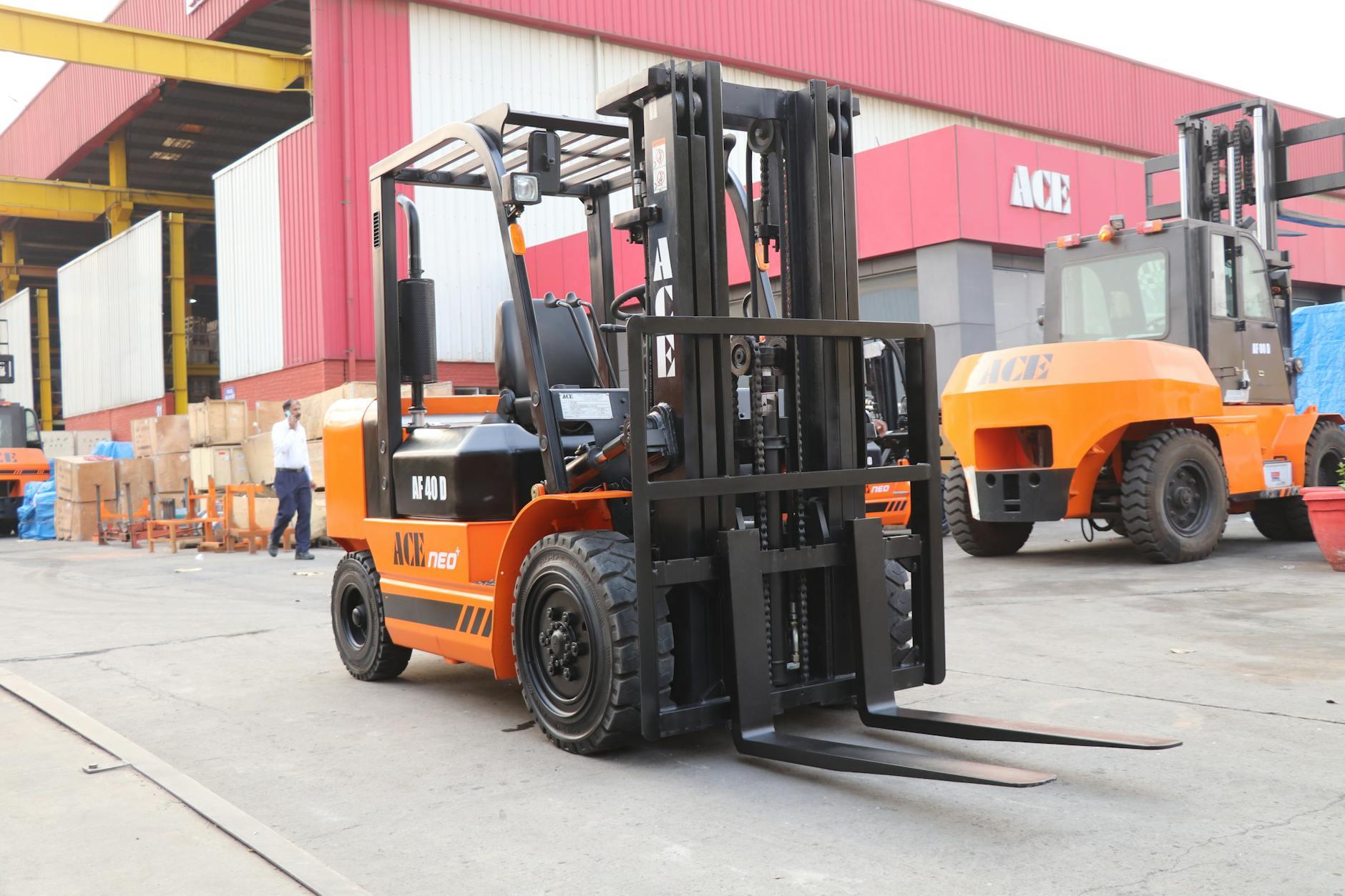
Georgia distribution operations require sophisticated inventory management that balances availability across warehouses, manufacturing facilities, and third-party logistics providers. We develop allocation algorithms that consider customer priority, shipping costs, product profitability, and inventory age when determining order fulfillment locations. One client reduced split shipments by 43% and shipping costs by $220,000 annually through smarter allocation logic that their previous ERP system couldn't support. The system maintains real-time visibility into available-to-promise inventory, accounting for in-transit goods, production schedules, and committed orders.

Our ERP systems integrate with accounting platforms through carefully designed APIs that maintain complete transactional integrity. We build bi-directional synchronization with QuickBooks, ensuring that sales orders, purchase orders, receipts, and payments flow seamlessly between operational and financial systems. Every transaction includes complete audit trails showing user, timestamp, and source system, supporting compliance requirements and simplifying month-end reconciliation. Our [sql consulting](/services/sql-consulting) expertise ensures that financial data remains accurate and queryable even as transaction volumes grow into millions of records annually.

Generic ERP scheduling tools assume manufacturing processes follow standard patterns, but Georgia manufacturers compete through specialized capabilities. We build custom scheduling engines that understand your specific constraints: cure times, color changeover sequences, equipment capabilities, crew certifications, and material availability. One implementation optimized a complex scheduling problem involving 14 production lines, 400+ SKUs, and customer-specific quality requirements, increasing on-time delivery from 79% to 96% while reducing overtime by 32%. The scheduling engine runs optimization algorithms every two hours, automatically adjusting the production plan as conditions change.
Food processors, pharmaceutical manufacturers, and automotive suppliers in Georgia need quality systems that integrate directly with production and inventory management. We develop QMS modules that capture inspection data, manage non-conformances, track corrective actions, and maintain complete lot traceability from raw materials through finished goods. These systems connect quality holds to inventory availability, preventing shipment of products that haven't passed required inspections. For one food manufacturer, this integration reduced customer complaints by 71% and provided the documentation trail needed for successful FDA inspections.
Modern B2B customers expect self-service access to order status, inventory availability, shipping information, and account history. We build customer portals that connect directly to your ERP database, providing real-time information without requiring internal staff involvement. Customers can place orders, track shipments, view invoices, and access custom reporting—all through responsive web interfaces that work on any device. One distribution client reduced order entry staff workload by 35% after portal adoption reached 78% of their customer base, while simultaneously improving order accuracy because customers entered their own requirements.
Georgia suppliers serving major retailers must exchange transactional documents through EDI: purchase orders, advance ship notices, invoices, and payment remittances. We build EDI translation and integration layers that automatically process these documents within your ERP system, eliminating manual data entry and ensuring compliance with partner requirements. Our implementations handle EDI 850, 856, 810, 820, and 997 transactions at volumes exceeding 50,000 documents monthly, with automated exception handling that alerts staff to issues requiring intervention while processing standard transactions without human involvement.
Warehouse operations require mobile functionality that works reliably in industrial environments with varying network connectivity. We develop native mobile applications and progressive web apps that warehouse staff use on tablets and handheld scanners for receiving, putaway, picking, and shipping. These mobile interfaces connect directly to your ERP system, updating inventory positions in real-time and providing immediate validation of operations. One warehouse implementation reduced picking errors by 94% through barcode verification and real-time bin location guidance, while cutting new employee training time from three weeks to five days through intuitive mobile interfaces.
FreedomDev is very much the expert in the room for us. They've built us four or five successful projects including things we didn't think were feasible.
Custom ERP systems eliminate annual licensing fees, reduce implementation costs through precise requirements alignment, and avoid expensive re-implementation projects during version upgrades, typically costing 40-60% less than packaged systems over seven years.
When ERP systems align precisely with how your team actually works, you eliminate workarounds, reduce training requirements, improve data accuracy, and increase system adoption across your organization.
Custom systems let you prioritize and implement new capabilities based on business value rather than vendor release schedules, ensuring your ERP system evolves as your operational requirements change.
Custom development creates clean integration points with your current technology stack—accounting platforms, CRM systems, manufacturing equipment, shipping platforms—without forcing replacements of specialized tools your team relies on.
When your ERP system supports operational approaches your competitors can't replicate using packaged software, you compete on capability rather than just price, protecting margins and winning customers who value your specialized services.
Direct access to your development team means issues get diagnosed and resolved based on your priorities, not vendor support ticket queues, typically reducing problem resolution time from days to hours.
We spend days observing how your team actually works—production scheduling, order processing, warehouse operations, and financial workflows. This field research identifies actual requirements rather than assumptions from requirements documents. We document current processes, pain points, integration needs, and system constraints, then facilitate working sessions to define how custom ERP capabilities will improve operations. Discovery typically requires 3-4 weeks for mid-sized operations.
Our architects design database schemas, integration points, security frameworks, and application architecture based on your specific requirements. We select technology stacks considering your IT team's capabilities, scalability needs, and integration requirements. Detailed technical specifications document system components, data flows, and interface designs. This phase includes infrastructure planning, determining hosting approach, and defining development and production environments.
Development occurs in two-week sprints, each ending with demonstrations of working functionality for stakeholder feedback. This iterative approach allows requirement refinements based on seeing actual system behavior rather than abstract specifications. Core functionality develops first—order management, inventory control, basic reporting—followed by specialized capabilities and integrations. Regular demonstrations ensure the system matches operational needs and allows early course corrections before significant development investment.
We develop migration scripts to extract data from legacy systems, apply necessary transformations and cleansing rules, and load into the new ERP database. Integration components connect your ERP system with accounting platforms, EDI partners, shipping systems, and manufacturing equipment. Extensive validation testing compares migrated data against source systems and verifies integration accuracy. Most projects include extended parallel operation periods where both systems run simultaneously, allowing comprehensive testing before final cutover.
Training begins during final development phases, allowing users to practice with real system functionality. We provide role-specific training for different user groups—warehouse staff, production schedulers, customer service, accounting—using training environments with realistic data. Production deployment typically occurs on weekends or during low-activity periods, with our team on-site to address issues immediately. Post-deployment support includes daily check-ins during the first week, reducing to weekly then monthly as your team gains proficiency.
After 60-90 days of production operation, we analyze system usage patterns, user feedback, and performance metrics to identify optimization opportunities. This review often reveals enhancements that improve efficiency now that users understand how the system supports their work. We help prioritize enhancement requests, estimate development effort, and create implementation roadmaps for continued system evolution. Many clients establish ongoing enhancement budgets, implementing 2-3 improvement projects annually as their operations evolve.
Georgia's economic geography creates specific ERP requirements that vary dramatically by region and industry cluster. Metro Atlanta's distribution density—with 70% of the U.S. population reachable within two days by truck—means logistics companies need systems optimized for high-volume order processing and carrier integration. Dalton's carpet and flooring industry requires production systems that handle custom orders, complex material scheduling, and just-in-time manufacturing. Savannah's port-adjacent manufacturers need ERP systems that integrate with international shipping documentation and customs processing. We develop ERP solutions that address these regional operational realities, not generic workflows from consultant playbooks.
The Port of Savannah's expansion to 9,700 feet of contiguous berth space and 42-foot deep harbor has transformed supply chain requirements for Georgia manufacturers and distributors. Companies importing raw materials or exporting finished goods need ERP systems that track containers from vessel arrival through drayage, provide real-time visibility into customs clearance status, and coordinate inventory availability with complex international shipping schedules. We've built customs documentation modules that generate commercial invoices, packing lists, and certificates of origin automatically from ERP order data, reducing shipping delays and customs holds that disrupt production schedules.
Georgia's food processing industry—the state's second-largest manufacturing sector—demands ERP capabilities that most packaged systems can't deliver. Poultry processors in Gainesville need lot traceability that follows products from specific farms through processing, distribution, and retail sale. Peanut processors in Southwest Georgia require commodity inventory management that handles forward contracts, basis pricing, and farmer settlements. Beverage manufacturers in Atlanta need recipe management that tracks ingredients by lot, calculates costs dynamically as commodity prices change, and adjusts production schedules based on packaging material availability. These specialized requirements justify custom development that packaged ERP systems approach through expensive customizations that break during upgrades.
The clustering of automotive suppliers along the I-85 corridor from Atlanta through Newnan has created a manufacturing ecosystem with stringent ERP requirements. Tier 1 and Tier 2 suppliers serving Kia, Mercedes-Benz, and other OEMs need systems that handle complex EDI requirements, maintain PPAP documentation, track measurement data through SPC charts, and coordinate just-in-time delivery schedules with production sequences at assembly plants. We've developed quality management integrations that automatically capture CMM measurements, compare results against control plans, trigger containment procedures when out-of-spec conditions occur, and maintain the documentation trails that automotive customers require during audits.
Georgia Technical College System programs and workforce development initiatives produce technical talent that supports advanced manufacturing operations, but this talent needs ERP systems designed for efficiency. Our user interface design philosophy emphasizes clarity over feature density—production schedulers see relevant information for their decisions without navigating through screens designed for different roles. Warehouse staff use mobile interfaces with large touch targets and voice-enabled picking. Accounting teams access financial data through familiar Excel-style grid interfaces. This role-based design approach reduced training time by 60% for one manufacturer hiring production staff from GSTC's manufacturing programs, getting new employees productive faster while reducing errors during their learning curve.
Atlanta's technology ecosystem—anchored by Georgia Tech's computer science programs and a growing startup community—provides access to development talent with specialized ERP expertise. Our team includes developers who previously built manufacturing systems for Fortune 500 companies, designed warehouse management algorithms for 3PL operations, and developed financial integrations for mid-market manufacturers. This concentration of specialized talent means Georgia businesses can access ERP development capabilities that match what large enterprises receive from major consulting firms, but with the attention and cost structure appropriate for middle-market companies.
Transportation infrastructure throughout Georgia creates both opportunities and requirements for ERP systems. I-75, I-85, and I-20 create efficient truck routes to major markets, but companies need TMS integration that optimizes carrier selection, consolidates shipments, and provides real-time tracking visibility. Norfolk Southern and CSX rail access in major industrial areas enables cost-effective bulk material transport, but requires ERP systems that coordinate rail car scheduling with production schedules. Hartsfield-Jackson's cargo facilities support time-sensitive shipments, demanding ERP integration with air freight forwarders. We build transportation management modules that leverage these infrastructure advantages while coordinating with production and inventory systems.
The economic development incentives available through the Georgia Department of Economic Development often support technology investments that improve operational efficiency. Companies expanding manufacturing facilities or opening distribution centers in Georgia can frequently access tax credits and incentives that offset custom ERP development costs. We've helped clients structure implementation projects to maximize available incentives, positioning ERP system investments as integral to facility expansion projects qualifying for state support. This strategic approach to project financing has enabled several clients to implement custom ERP capabilities they initially considered beyond their budget.
FreedomDev is based in West Michigan and works with clients remotely across the United States.
Schedule a direct consultation with one of our senior architects.
FreedomDev has delivered custom software solutions since the early 2000s, accumulating deep expertise in manufacturing, distribution, and financial systems. Our team understands how operational systems really work—not from textbooks but from years building production scheduling engines, warehouse management systems, and financial integrations for companies with complex requirements. This experience means we anticipate challenges before they impact your project and design solutions that handle real-world operational complexity.
Our [case studies](/case-studies) document real implementations: fleet management systems with 30-second data refresh rates, QuickBooks integrations processing hundreds of daily transactions, and warehouse systems handling 2,400 orders daily. These aren't marketing claims—they're documented systems running in production environments today. We bring this integration expertise to every ERP project, whether you need EDI connections to retail partners, MES integration with production equipment, or TMS coordination with freight carriers.
Our development team includes specialists who understand manufacturing operations, inventory management algorithms, and financial system requirements at detailed technical levels. We've built production scheduling optimizers, lot traceability systems, advanced allocation engines, and quality management integrations. This operational knowledge means we design database schemas and business logic that reflect how manufacturing and distribution actually work, not generic data models from ERP textbooks.
Based in West Michigan for over two decades, we bring Midwest work ethic and straightforward communication to every client relationship. We've worked extensively with Georgia manufacturers and distributors, understanding regional business dynamics, workforce considerations, and economic development opportunities. When you [contact us](/contact), you talk directly with developers and project managers who will work on your system—no sales teams or account managers separating you from technical expertise. This direct communication ensures your operational requirements translate accurately into system capabilities.
We support ERP systems throughout their operational lifecycle: architecture and development, data migration, integration implementation, user training, production support, performance optimization, and ongoing enhancement. Our team maintains long-term relationships with clients, some spanning over a decade, continuously evolving their systems as business requirements change. This comprehensive support approach means you have a committed technical partner, not just an implementation vendor who disappears after go-live. You can explore [all services in Georgia](/locations/georgia) we provide to support your complete operational technology needs.
Explore all our software services in Georgia
Let’s build a sensible software solution for your Georgia business.