
FreedomDev delivers tailored ERP development services across Arkansas, empowering local industries with scalable, secure systems built for evolving needs.
FreedomDev is based in West Michigan and works with clients remotely across the United States.
Arkansas manufacturers contribute over $24 billion annually to the state's economy, with concentrated clusters in food processing, aerospace, and automotive parts production. Companies across Little Rock, Bentonville, Fayetteville, and Fort Smith struggle with legacy ERP systems that can't handle multi-site operations, complex compliance requirements, or real-time inventory visibility. We've built ERP solutions for manufacturers managing everything from USDA traceability in poultry processing to DOT compliance in freight logistics, delivering systems that eliminate manual data entry and provide actual operational control.
The challenge we see most frequently with Arkansas businesses is disconnected systems—one platform for manufacturing execution, another for financial management, a third for warehouse operations, and spreadsheets holding it all together. A food processing client in Rogers was maintaining product lot traceability across six facilities using Excel files emailed between plants, creating massive recall liability and zero real-time visibility. We replaced this with an integrated ERP system that automatically tracks raw material lots through processing, blending, packaging, and distribution with full FDA 21 CFR Part 11 compliance. Their audit preparation time dropped from three weeks to four hours.
Arkansas's position as a major distribution hub creates unique ERP requirements that off-the-shelf systems can't address. Companies here often need to manage inventory across multiple warehouses, integrate with transportation management systems, and handle complex cross-docking operations while maintaining visibility across the entire supply chain. We built a distribution ERP for a Little Rock company managing 47 client warehouses across seven states, processing 12,000+ daily transactions with automated replenishment logic and carrier integration. You can see how we've solved similar integration challenges in our [QuickBooks Bi-Directional Sync](/case-studies/lakeshore-quickbooks) case study.
Manufacturing operations in Northwest Arkansas demand ERP systems that handle make-to-order, configure-to-order, and engineer-to-order production simultaneously. A metal fabrication client in Springdale was using a commercial ERP that required eighteen clicks to generate a work order and couldn't handle their custom configuration rules. We built a replacement system with a streamlined three-click work order process and embedded configuration engine that validates customer specifications against manufacturing capabilities in real-time. Their quote-to-production cycle time decreased by 63%, and configuration errors dropped to near zero.
The financial complexity of Arkansas businesses extends beyond basic accounting into cost accounting, project accounting, and multi-entity consolidation. Agricultural equipment manufacturers need to track costs by job, allocate overhead across product lines, and consolidate financials across manufacturing and distribution subsidiaries. We've implemented job costing systems that capture labor, materials, and overhead at the operation level, providing actual versus estimated cost analysis that reveals which products and customers generate real profit. This granular visibility typically exposes margin opportunities worth 4-8% of revenue that were previously invisible.
Integration requirements for Arkansas ERP systems often include legacy platforms that can't be replaced immediately. We worked with a Fort Smith manufacturer running a 1990s-era production control system that contained decades of process knowledge and custom logic. Rather than forcing a risky full replacement, we built an integration layer that synchronized the old system with new ERP modules for finance, inventory, and shipping. This phased approach eliminated the risk of losing critical production logic while modernizing the business management platform. Learn more about our approach in our [systems integration](/services/systems-integration) service area.
Real-time data access transforms how Arkansas manufacturing and distribution companies make decisions. A Jonesboro automotive supplier was making production scheduling decisions based on inventory reports run overnight, leading to frequent stockouts and rush orders. We implemented an ERP system with live inventory visibility across four plants and twelve supplier locations, enabling schedulers to see actual material availability and adjust production sequences in real-time. Their expedite freight costs dropped by $340,000 annually, and on-time delivery improved from 87% to 98%.
The scalability challenges we address involve both technical capacity and business process evolution. A rapidly growing food manufacturer in Pine Bluff needed an ERP system that could handle their current two-facility operation while scaling to support planned expansion to eight facilities over three years. We architected a multi-tenant system with standardized core processes and configurable facility-specific workflows, enabling them to onboard new locations in weeks rather than months. This architectural foundation supports their growth without requiring system replacement or major re-implementation.
Arkansas's diverse industry base means we build ERP systems for completely different operational models—from high-mix low-volume job shops to continuous process manufacturing. A chemical blending operation in El Dorado needed formula management, batch tracking, and EPA emissions reporting integrated into their ERP, while a machine shop in Conway required routing-based scheduling and tool management. We build these industry-specific capabilities into the core ERP rather than bolting on third-party modules, ensuring seamless data flow and consistent user experience across all functions.
Mobile accessibility has become essential for Arkansas manufacturers with production floor workers, warehouse staff, and delivery drivers who need ERP access away from desktop computers. We've implemented mobile interfaces for production reporting, inventory transactions, and quality inspections that work reliably in industrial environments with spotty Wi-Fi. A furniture manufacturer in Batesville equipped production supervisors with tablets running custom ERP interfaces, enabling real-time job status updates and material requisitions from the shop floor. This eliminated the paper travelers and clipboards that previously created 4-6 hour data lag.
The total cost of ERP ownership extends beyond initial implementation to ongoing maintenance, upgrades, and user support. We've seen Arkansas companies trapped in expensive maintenance agreements for commercial ERP systems they've outgrown, paying 22% annual fees for software that no longer fits their business. Custom ERP development provides an alternative ownership model where you control the codebase, avoid recurring licensing fees, and make changes on your timeline. A distribution company in Hot Springs calculated five-year savings of $680,000 by moving from a commercial ERP to a custom-built platform.
Data migration from legacy systems represents one of the highest-risk aspects of ERP implementation. We've refined migration approaches that validate data quality, preserve historical information, and enable parallel operation during transition periods. For a manufacturer with 15 years of production history in an old ERP system, we built migration scripts that validated every record, flagged inconsistencies, and provided reconciliation reports. The cutover happened over a three-day weekend with zero data loss and full historical traceability preserved. Our detailed approach to ERP implementation is outlined in our [erp development expertise](/services/erp-development) overview.
Tell us what is happening, what systems are involved, and what you are trying to improve. We'll help determine a practical next step.
We build finite capacity scheduling systems that account for machine availability, tooling constraints, labor skills, and material availability to generate executable production plans. A Northwest Arkansas manufacturer processes 400+ active jobs simultaneously across 35 work centers with varying capabilities and setup requirements. Our scheduling engine considers setup time matrices, preferred production sequences, and customer priority to generate optimal schedules that maximize throughput while meeting delivery commitments. The system reduced average job lead time from 12.3 days to 8.7 days while improving on-time delivery.
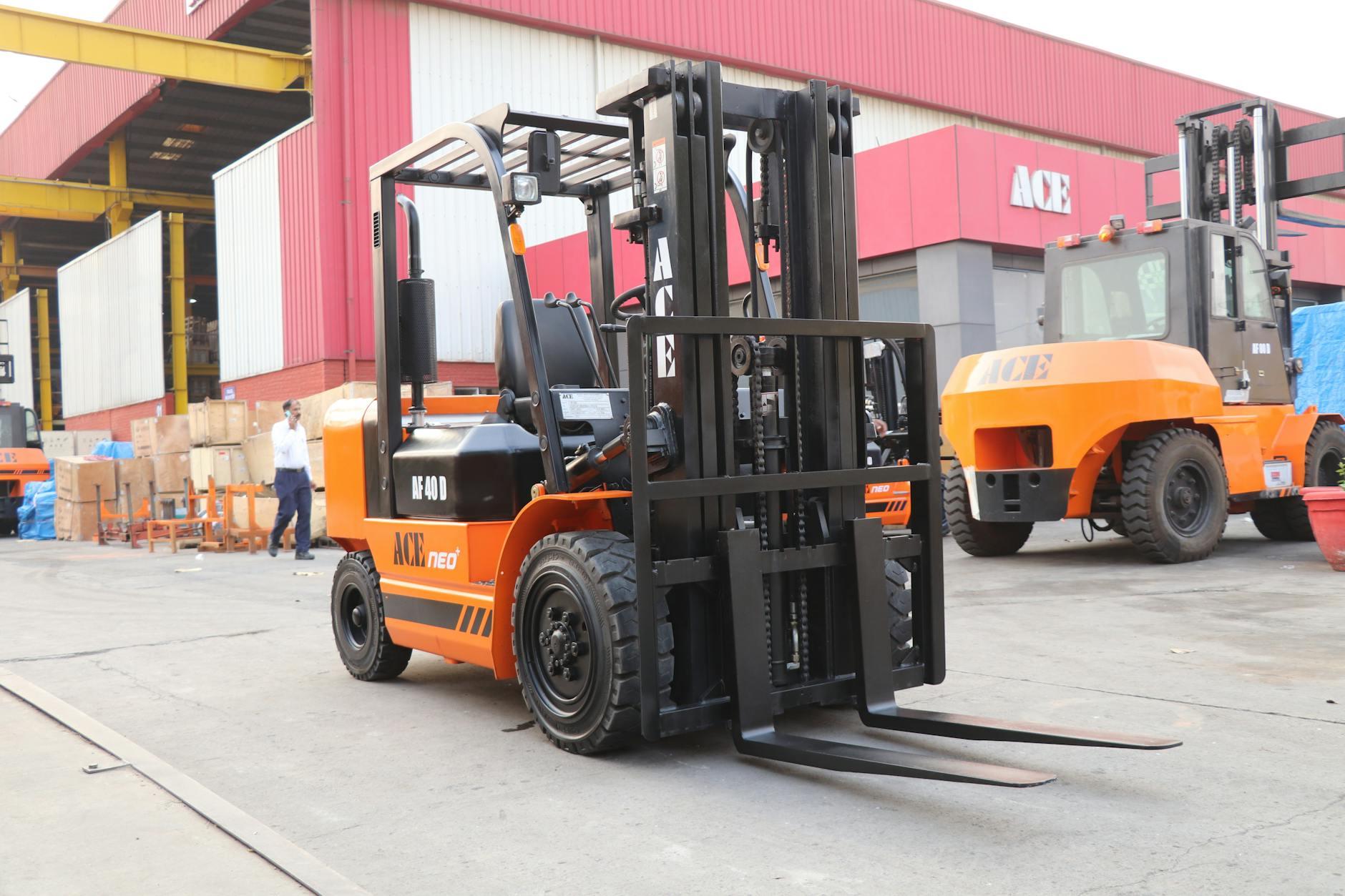
Our ERP systems track inventory from receiving through consumption with complete lot genealogy for compliance and recall management. We implemented a system for an Arkansas food processor that maintains forward and backward traceability across raw materials, work-in-process, finished goods, and shipped products. When they need to trace a finished product lot, the system instantly identifies every raw material lot consumed, every processing step, and every customer shipment in under three seconds. This capability transformed their recall readiness from days of manual investigation to immediate, accurate identification.
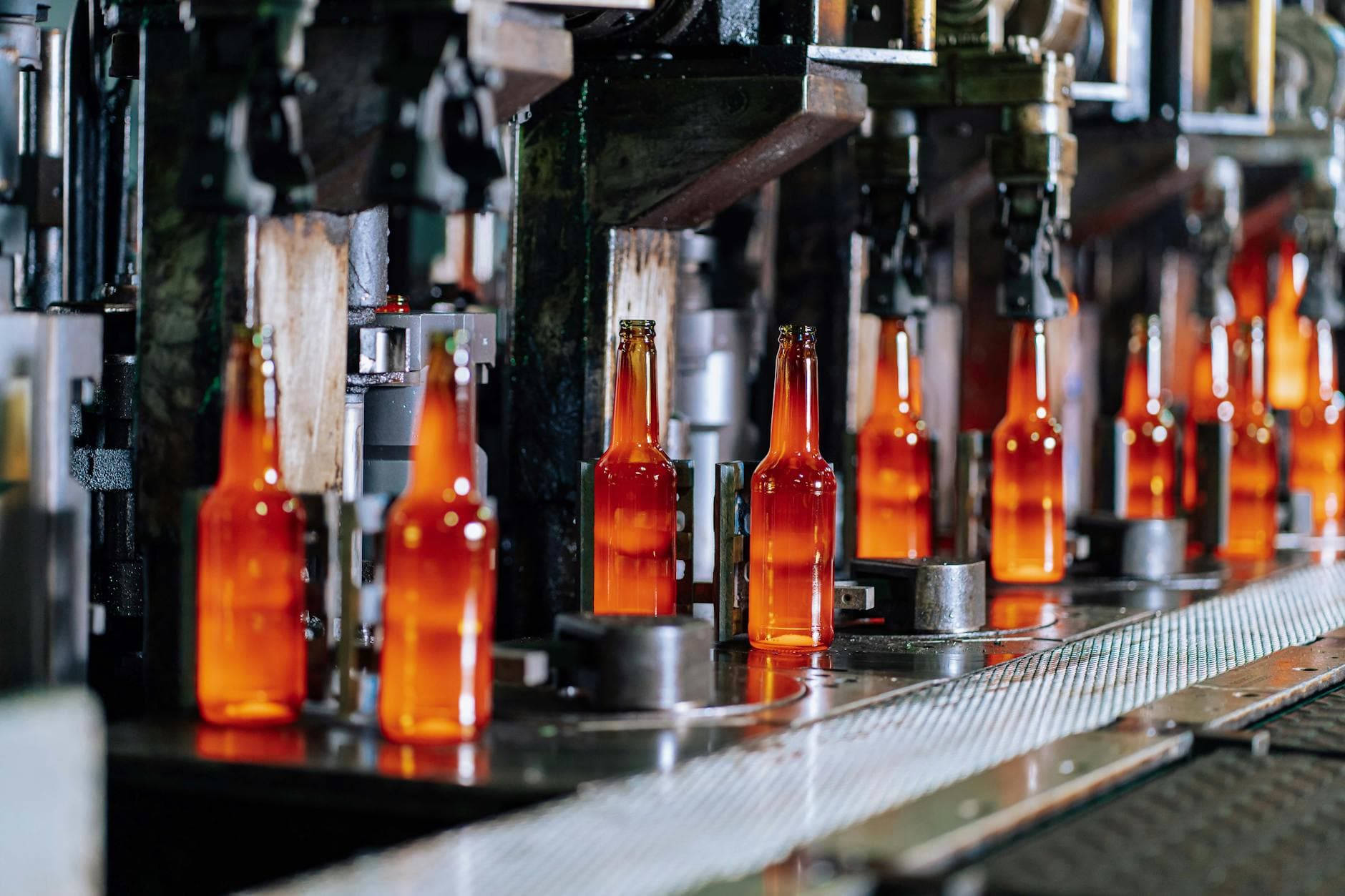
We implement comprehensive financial systems that extend beyond general ledger to job costing, standard costing, and variance analysis. An Arkansas job shop needed to track actual costs by operation for each customer order to identify profitable work and improve estimating accuracy. Our ERP captures labor hours, material consumption, and allocated overhead at the operation level, comparing actual costs against estimates and generating variance reports that reveal systematic estimating errors. This visibility enabled them to reprice their most common operations and improve gross margin by 6.3 percentage points.

Our ERP platforms incorporate quality control workflows, inspection recording, and corrective action tracking integrated with production and inventory modules. A metal fabrication company in Arkansas needed to track first article inspections, in-process measurements, and final inspections with full documentation for AS9100 compliance. We built quality modules that guide inspectors through measurement plans, capture results with statistical analysis, and automatically quarantine non-conforming material. Their external audit findings dropped from 12 to zero, and scrap costs decreased by 40%.
We develop purchasing systems that manage supplier performance, automate replenishment, and optimize inventory investment. An Arkansas distributor was manually creating purchase orders based on visual bin checks and institutional knowledge, resulting in frequent stockouts and excess inventory. Our ERP calculates reorder points based on actual demand patterns, lead time variability, and service level targets, automatically generating purchase requisitions and sending them for approval. Their inventory turns increased from 4.2 to 6.8 while maintaining 99.2% fill rates, freeing $1.2 million in working capital.
We build WMS capabilities that optimize receiving, putaway, picking, and shipping with barcode scanning and directed workflows. A Little Rock distribution center handles 2,400 SKUs across 85,000 square feet with variable storage locations and complex picking requirements. Our ERP-integrated WMS directs putaway to optimal locations based on velocity and dimensions, generates optimized pick paths that minimize travel distance, and validates shipments against orders. Their picking productivity improved by 34%, and shipping accuracy reached 99.7%.
Our ERP implementations include embedded analytics that transform operational data into actionable insights without requiring separate BI tools. We create role-specific dashboards that surface relevant KPIs—production managers see machine utilization and schedule adherence, while CFOs view margin analysis and cash flow projections. An Arkansas manufacturer uses automated daily reports that identify jobs behind schedule, inventory items approaching reorder points, and customers exceeding credit limits. These proactive alerts enable intervention before problems escalate. See how we've implemented similar analytics in our [business intelligence](/services/business-intelligence) practice.
We develop customer-facing portals that provide order status, shipment tracking, and document access without staff intervention. A distributor serving contractors across Arkansas built a portal where customers check inventory availability, place orders, view pricing specific to their account, and download invoices and proof-of-delivery documents. This self-service capability handles 68% of customer inquiries without phone calls or emails, reducing customer service workload while improving customer satisfaction. The portal synchronizes with the core ERP in real-time, ensuring customers see accurate, current information.
It saved me $150,000 last year to get the exact $50,000 I needed. They constantly find elegant solutions to your problems.
Integration across finance, operations, and distribution means information is entered once and flows automatically to all dependent systems. Arkansas companies typically eliminate 15-25 hours weekly of redundant data entry.
Live dashboards replace overnight batch reports, enabling managers to see current production status, inventory levels, and financial positions. Decision-making improves when based on actual current state rather than yesterday's data.
Custom ERP systems are built to accommodate business expansion without requiring replacement. Adding facilities, product lines, or business units becomes configuration rather than re-implementation, supporting growth without system constraints.
Industry-specific compliance requirements are embedded in workflows and data structures rather than handled through manual procedures. FDA, ISO, AS9100, and other regulatory requirements become automated, reducing audit preparation and ensuring consistency.
Custom ERP eliminates per-user licensing fees, annual maintenance costs, and forced upgrade cycles. Arkansas mid-market companies typically save $80,000-$200,000 annually compared to commercial ERP total cost of ownership.
ERP capabilities can become competitive advantages when they enable services or responsiveness competitors can't match. Same-day shipping, customer-specific processing, or real-time order status become possible when systems support these capabilities natively.
We spend 2-4 weeks documenting your current operations, understanding pain points, and identifying improvement opportunities. This involves observing actual workflows in your Arkansas facilities, interviewing staff across departments, and analyzing existing system data and reports. The output is a detailed requirements document and system architecture proposal that addresses your specific needs rather than generic ERP functionality.
Our technical team designs database structures, integration points, and user interfaces based on discovery findings. We create detailed specifications for each module, defining data models, business logic, and workflow automation. Arkansas clients review interface mockups and process flows to validate that proposed solutions match operational requirements before development begins. This design phase typically requires 3-4 weeks and prevents expensive mid-project changes.
Development proceeds in sprints delivering working functionality every 2-3 weeks for your review and feedback. We prioritize core modules first—typically master data, inventory management, and basic transactions—then build advanced capabilities on this foundation. Arkansas clients access development systems to test functionality with their actual data and workflows, identifying issues early when they're inexpensive to fix. This iterative approach ensures the final system matches operational needs.
We execute the data migration plan developed during discovery, transforming legacy data to new structures while validating accuracy and completeness. Integration with systems you're keeping is built and tested with actual transaction volumes to ensure performance. For Arkansas manufacturers maintaining existing CAD, quality, or shipping systems, we validate that data flows correctly in both directions and handles exception conditions gracefully.
We deliver role-specific training to your staff 2-3 weeks before go-live, using realistic scenarios with your actual data. Our team is on-site at your Arkansas facility during the first week of operation to resolve issues immediately and ensure smooth transition. Most companies run parallel operations for 1-2 weeks, validating that new ERP produces accurate results before fully retiring legacy systems.
After stabilization, we analyze system usage patterns and user feedback to identify optimization opportunities. This might include performance tuning for reports taking too long, workflow adjustments based on actual usage, or additional automation for repetitive tasks. Arkansas clients typically implement 2-4 significant enhancements in the first year as they discover additional opportunities enabled by integrated ERP capabilities.
Arkansas's economy centers on manufacturing and distribution, with particular strength in food processing, forest products, aerospace, and automotive components. The state's 2,500+ manufacturing establishments generate significant ERP demand, yet many Arkansas companies find that commercial platforms don't address their specific operational requirements. A poultry processor in Northwest Arkansas faced systems that couldn't handle USDA traceability requirements for their specific process flow, while a steel fabricator in Little Rock struggled with ERP software that didn't accommodate their engineer-to-order workflow. We build systems specifically designed for how Arkansas companies actually operate.
The Northwest Arkansas business corridor from Bentonville to Fayetteville represents one of the nation's most concentrated retail and supply chain ecosystems. Suppliers to major retailers need ERP systems that handle EDI transactions, vendor compliance requirements, and complex chargebacks while managing their own manufacturing or distribution operations. We've implemented ERP platforms that automatically process EDI 850 purchase orders, generate ASN shipment notices, validate against routing guides, and calculate delivered costs including freight and chargebacks. This end-to-end automation eliminates the manual reconciliation that previously consumed days of accounting staff time.
Central Arkansas manufacturing around Little Rock, North Little Rock, and Conway spans diverse industries from aerospace to machinery, each with distinct ERP requirements. An aerospace components manufacturer needed lot traceability with material certifications, while a packaging equipment builder required complex bill-of-material management for highly configurable products. These companies share geography but need fundamentally different ERP capabilities. Our [custom software development](/services/custom-software-development) approach builds precisely what each company needs rather than forcing them into generic platforms designed for other industries.
The timber and forest products industries concentrated in southern Arkansas require ERP systems that handle unique cost accounting challenges. A sawmill in Monticello needed to allocate log costs across multiple products generated from each log—lumber of various grades, chips, sawdust, and bark. Their previous system treated these as separate purchases rather than joint products, making margin analysis impossible. We built cost allocation logic that distributes log costs based on relative sales values and tracks profitability by product grade and customer. This visibility revealed that certain customers buying low-grade lumber were significantly more profitable than premium buyers due to pricing dynamics.
Arkansas's strategic location at the intersection of I-40 and I-55 makes the state a distribution hub for regional and national operations. Companies operating multiple distribution centers across the state need ERP systems that provide consolidated inventory visibility while managing facility-specific operations. A building materials distributor with locations in Little Rock, Fort Smith, Texarkana, and Jonesboro needed real-time visibility to customer-specific inventory across all sites to promise accurate delivery dates. Our ERP system aggregates available-to-promise calculations across locations and automatically routes orders to optimal fulfillment points based on freight costs and inventory availability.
The agricultural equipment and farm supply sectors require ERP systems that handle seasonal demand patterns, consignment inventory, and complex rental operations. A farm equipment dealer needed to track units on consignment from manufacturers, manage rental fleet utilization and maintenance, track trade-ins, and coordinate service operations across multiple locations. Their commercial ERP couldn't handle rental billing based on equipment usage hours or manage trade-in valuations integrated with new equipment sales. We built specialized modules that treat rental assets distinctly from sales inventory while maintaining unified financial reporting.
Food processing operations across Arkansas face increasingly complex traceability and food safety requirements that generic ERP systems can't address. Following the Food Safety Modernization Act, processors need systems that document supplier verification, maintain environmental monitoring records, and generate recall reports within required timeframes. We implemented an ERP system for a frozen food manufacturer that automatically logs cooler temperatures, tracks water activity testing, maintains supplier certificates, and generates complete production records for each lot. When FDA inspectors visit, the company can produce complete documentation for any production lot within minutes rather than days of manual record assembly.
The growth of e-commerce has created ERP integration requirements that didn't exist five years ago. Arkansas manufacturers and distributors selling through online channels need real-time inventory synchronization, automated order import, and customer account integration between ERP and e-commerce platforms. We've built bidirectional integrations that push inventory availability to Shopify and BigCommerce stores every five minutes, import orders automatically for fulfillment, and sync shipment tracking back to customer accounts. This integration eliminated the order entry backlog that previously created 24-48 hour delays between order placement and fulfillment.
Quality of life and business costs in Arkansas make the state increasingly attractive for manufacturing operations, with companies relocating from higher-cost regions. These companies often bring legacy systems that don't scale efficiently or require expensive consultant support. We've worked with several manufacturers who moved operations to Arkansas and took the opportunity to replace inadequate ERP systems that had accumulated technical debt and customizations. Building fresh ERP platforms aligned with their current processes rather than migrating problematic legacy systems eliminates the accumulated problems while supporting their growth plans. You can explore all our Arkansas capabilities at [all services in Arkansas](/locations/arkansas).
FreedomDev is based in West Michigan and works with clients remotely across the United States.
Talk with an experienced member of our team about your situation.
We've built ERP systems for manufacturers across industries since 2003, accumulating deep expertise in production planning, cost accounting, inventory management, and quality control. This experience means we understand the complexities you face and have solved similar challenges for other Arkansas companies. Our team includes developers who understand manufacturing operations, not just software development.
You own the codebase and control the enhancement roadmap rather than waiting for vendor releases or paying for features you don't need. Arkansas companies appreciate this control when business requirements change or acquisition opportunities require rapid system adaptation. We document architecture and logic thoroughly, ensuring you're not dependent on us for basic maintenance even while most clients choose ongoing relationships.
Our 20+ years in custom development means we've integrated with hundreds of systems—from modern cloud APIs to legacy AS/400 databases. Arkansas manufacturers often need ERP integration with CAD systems, machine data collection, e-commerce platforms, and shipping systems. We've built these integrations repeatedly and understand both the technical approaches and the business logic required for reliable synchronization.
Our phased approach delivers working functionality progressively while managing risk through parallel operation and incremental cutover. We've refined this methodology over dozens of implementations, learning from both successes and challenges. Arkansas clients benefit from this experience through realistic timelines, comprehensive testing, and contingency planning that prevents the catastrophic failures sometimes seen in commercial ERP projects. Review our implementation approach through [our case studies](/case-studies).
We maintain relationships with clients for years, supporting their ERP systems as businesses evolve and requirements change. Several Arkansas companies have worked with us for 10+ years, continuously enhancing their platforms as they've grown. This continuity means we understand your business context and can implement changes efficiently without re-learning your operations each time you need enhancements.
Explore all our software services in Arkansas
Tell us what is happening, what systems are involved, and what you are trying to improve in Arkansas. We'll help determine a practical next step.